Pai Gow Tiles Pair Ranking
The pair hierarchy in Pai Gow Tiles is the single most exploited gray area in tile-room floor operations, and anyone who tells you the ranking order is "just tradition" has never audited a settlement dispute at 3 a.m. The truth is brutal and mechanical: Pai Gow Tiles pair ranking follows a fixed civil-law hierarchy, and the moment a dealer or a pit supervisor deviates by even one tier, the house eats a liability that compounds across every hand on that table for the rest of the shift. 🎯
Let me break the actual stack. The supreme pair is Gee Joon — the 3 and the 6, the two wild tiles that can morph into a 3 or a 6 at settlement. It sits alone at the apex. Below it comes the Teen pair (heaven, both 12s), then Day (earth, both 2s), then Yun (both 8s), then Gor (both 4s), then Mooy (both 11s), then Chong (both 10s), then Bon (both 6s), then Foo (both 11s in the civilian set), then Ping (both 5s), then Tit (both 1s), and finally the mixed Chop pairs — Chop Gow, Chop Bot, Chop Chit, Chop Ng, Chop Gow Chat and so on. Memorize that sequence or get off the felt. The mixed Chop tiers are where 90 percent of mispays originate because dealers reflexively rank them by pip count instead of the codified order.
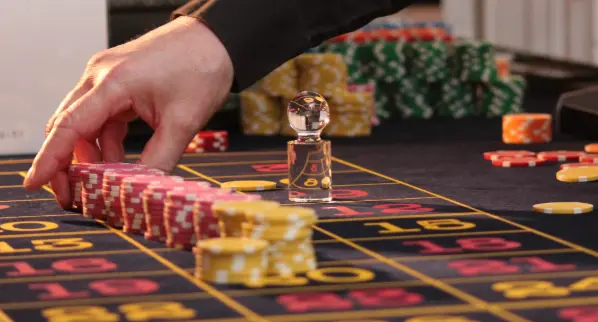
Here is the hardware-level insight most floor managers never internalize: pair ranking is not a value scale, it is a strict ordinal ranking, and the engine that resolves ties between identical-rank pairs uses the high tile of the dealer's hand as the tiebreaker — never the player's. If a player holds a Teen pair and the banker holds a Teen pair, the banker's high tile governs. That single rule has been the source of more backroom arguments than any other line in the tile codex, and it is precisely why experienced auditors insist on Pai Gow Tiles pair ranking being posted at eye level on every table, not buried in a laminated card under the chip tray.
Traditional Pai Gow Tile Table Limits
Table limits on traditional Pai Gow Tiles are not arbitrary decoration — they are a risk-control instrument calibrated to tile variance, and the calibration is unforgiving. A standard bankroll model for a 32-tile set with a 5 percent house edge on the copy hand demands a minimum unit that keeps the maximum exposure per round under roughly 2 percent of the table's total float. 🃏
Walk into any serious tile room and you will see limits structured in three bands: a floor minimum, a standard maximum, and a high-roller ceiling that requires pit approval. The floor minimum exists to keep the shuffle-to-wager ratio economically viable; below a certain threshold, the house is paying dealer time for nothing. The standard maximum is where the math bites — it is set so that a single catastrophic settlement cannot wipe the table's session float. And the ceiling? That is pure theater unless the float is verified, which is why sharp auditors demand Traditional Pai Gow Tile Table Limits be tied to a live float count rather than a printed placard. 💰

Watch for the limit-creep scam: a table advertises a modest maximum, but the pit quietly allows "discretionary" over-limit action for a whale. That discretionary window is where the float ratio shatters. If the ceiling is 500 and the float is 20,000, a single 2,000 over-limit wager pushes exposure past 10 percent — a structural breach, not a courtesy. The traditional limits only function when the ceiling is enforced to the dollar.
One more mechanic that separates pros from tourists: the commission structure on the copy hand interacts directly with the limit band. Tiles typically carry a 5 percent commission on winning banker hands, and that commission is calculated on the wager, not the net. So a 400 wager at a 500 ceiling returns 380 after commission, and the effective edge shifts depending on whether the table rounds commission up or down. Round-up on a 5 percent commission across a high-limit band silently adds 0.3 to 0.5 percent to the house edge per hand — a detail that belongs in every float audit and every limit review. The floor that ignores this is not running a game; it is running a leak.